
News Center
Focusing on rare diseases, Shengshi Taikang's new drug development holds promise in bringing hope to patients with multiple sclerosis.
Release date:
2019-02-28
Today marks the 12th International Rare Disease Day. Recall that in 2014, the globally popular Ice Bucket Challenge sparked widespread public attention toward rare diseases—including ALS, or "Lou Gehrig's disease." Recently, Shengshi Taikang’s Class 3.1 innovative drug, teriflunomide, has officially launched its consistency evaluation clinical trial, targeting multiple sclerosis—a condition similar to ALS—and is poised to bring much-needed hope to MS patients across China! 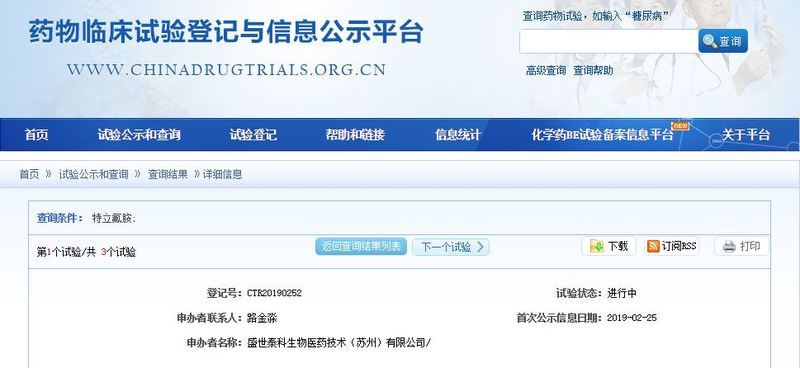
Multiple sclerosis is the most common central nervous system demyelinating disease, primarily characterized by impairments in language, vision, motor skills, sensation, and cranial nerve dysfunction. Reports indicate that in 2013, scientists at Johns Hopkins discovered potential links between amyotrophic lateral sclerosis—commonly known as ALS, or "Lou Gehrig's disease"—and multiple sclerosis. This breakthrough may allow researchers studying MS to explore overlapping therapeutic strategies aimed at slowing the progression of ALS, potentially opening a new avenue for treating patients with this devastating condition.
Currently, more than 350,000 people in the United States are living with multiple sclerosis, while the number of patients in China ranges from 40,000 to 50,000—compared to approximately 2.5 million worldwide. Symptoms typically first appear between the ages of 20 and 40, and women are affected roughly twice as often as men. Most patients are currently experiencing relapses of the disease. The primary goal of treating multiple sclerosis is to reduce the duration and severity of symptoms associated with relapses, lower the frequency of relapses, and slow the progression of the disease over time. 
The development of treatments for rare diseases has not been forgotten by society. Many countries around the world, particularly in developed nations, have established systems to actively encourage the creation of drugs targeting rare diseases. In 2013, the National Medical Products Administration issued Document No. 37 [2013], clearly outlining priority review procedures for both innovative and generic drugs intended to treat rare diseases.
On May 22, 2018, the National Health and Family Planning Commission added multiple sclerosis to the list of rare diseases, accelerating the approval process for related medications. As a result, Shengshi Taikang’s independently developed drug now only needs to complete a drug consistency evaluation in healthy individuals before it can apply for market approval and sales. According to Dr. Yu Qiang, CEO of Shengshi Taikang, the preliminary clinical trials have already met all required standards, with the active pharmaceutical ingredient and formulation demonstrating equivalence to the original branded product. The company expects to finalize all remaining experimental procedures this year. Currently, aside from Sanofi’s imported teriflunomide—the original manufacturer—no other comparable products are available in China. Shengshi Taikang’s teriflunomide will offer domestic multiple sclerosis patients relief from their suffering, delivering the same high-quality standards as the global original while being priced competitively.
Contact Information
Address: Room 101, Bld C11, 218 Xinghu Rd,Suzhou industrial Park,China, 215123
Tel: +86-512-62956960(Recruitment)
+86-512-62956961(marketing)
Copyright © 2022 CGeneTech (Suzhou, China) Co., Ltd.
在线客服添加返回顶部
页面顺滑的滚动
屏蔽页面上图片的alt/title提示
右侧在线客服样式 1,2,3 2
图片alt标题设置: Fland Environmental
表单验证提示文本: The content cannot be empty!
循环体没有内容时: Content is being organized—please wait!
CSS / JS 文件放置地